
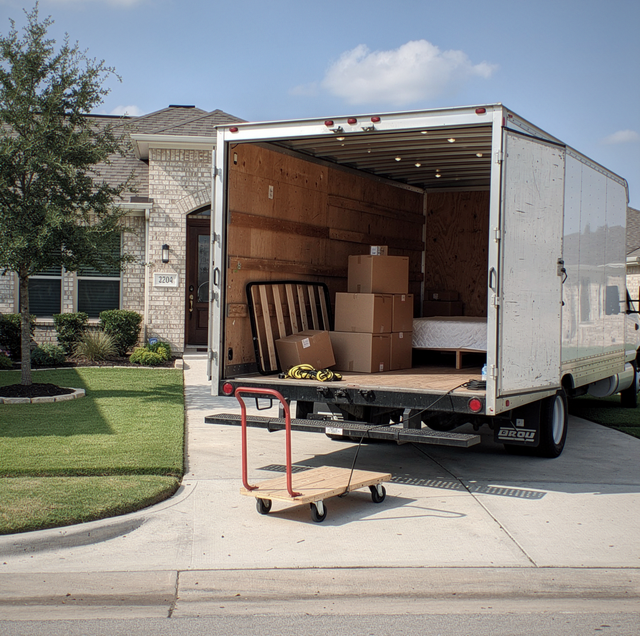
Picking a truck size sounds like it should be simple: bigger home, bigger truck. In practice, the mistake that costs the most time isn't picking a truck that's too small; it's the two-trip scramble that follows when a truck fills up with half the house still sitting on the curb. Getting the size right the first time comes down to cubic footage and weight capacity, not just the home's square footage.
Why Home Size Doesn't Translate Directly to Truck Size
A 1,200-square-foot house with a family who's lived there for fifteen years can have more total volume to move than a 2,000-square-foot house someone moved into two years ago. Truck sizing is really about cubic feet of belongings, not square feet of living space, which is why an experienced mover asks about furniture and box count rather than just square footage when sizing a job.
Comparing Common Truck Sizes
Moving trucks are generally sized by length, and each length range corresponds to a rough volume in cubic feet and a typical home size it can fit. These are working guidelines, not fixed rules, since a heavily furnished small home can need the same truck as a lightly furnished larger one.
| Truck Length | Approx. Cubic Feet | Typical Fit | Loading Notes |
|---|---|---|---|
| 10-12 ft | 400-450 cu ft | Studio or small one-bedroom | Fine for boxes and light furniture, but a full bedroom set can hit the weight limit before the space runs out |
| 16 ft | 800-900 cu ft | One-bedroom to small two-bedroom | Handles a full bedroom set plus a living room and kitchen's worth of boxes |
| 20-22 ft | 1,000-1,200 cu ft | Two-to-three-bedroom home | Comfortable margin for appliances and larger furniture without a second load |
| 26 ft | 1,600+ cu ft | Three-to-four-bedroom-plus home | Largest common size; still may need a second trip for a heavily furnished larger home |
Two figures matter here, not just one. Cubic feet indicates whether the volume of your belongings physically fits inside the truck's box. Weight capacity tells you whether the truck's axles and suspension can carry it, and dense items like books, dishware boxes, and a full-sized washer or dryer can hit a weight limit well before the truck actually looks full inside.
How Movers Actually Estimate Volume
An experienced estimator isn't just eyeballing rooms; they're mentally converting furniture into cubic feet using rough benchmarks: a queen bedroom set, a sofa and loveseat combination, ten to fifteen medium boxes, and a kitchen's worth of appliances each occupy a fairly predictable and repeatable amount of space. Walking through a home room by room and counting large furniture pieces, then adding an estimate for boxes based on closet and storage space, gets a far more reliable truck size than guessing from square footage alone.
What Happens When the Truck Is Too Small
The most common failure point isn't a truck that's obviously undersized from the start; it's one that looked like it would work until the last quarter of loading, when heavier furniture pieces and appliances that were saved for last suddenly don't have room to fit efficiently around what's already loaded. That forces either a second trip, which adds hours and fuel, or inefficient stacking, which increases the risk of items shifting and being damaged in transit.
What Happens When the Truck Is Too Big
An oversized truck isn't just wasted fuel and a bigger vehicle to maneuver into a tight driveway or a narrow apartment loading zone. It also means furniture and boxes have more room to slide around during transit, since there's less packed-in stability holding everything in place. A truck loaded to roughly 80 to 90 percent of its capacity, with straps and blankets used to secure the remaining gaps, generally rides safer than one that's only a third full.
Efficient Loading Makes the Size You Have Go Further
Regardless of which size is chosen, how a truck is loaded affects how much of that space is actually used. Heavy, flat items like dressers and mattresses go in first along the walls to create a stable base and a straight loading wall. Odd-shaped items and boxes fill in gaps between and around furniture rather than getting stacked in their own separate section. Soft items like mattresses and cushions are used to fill gaps around fragile furniture, rather than wasting space with empty air pockets. A well-loaded 20-foot truck can end up carrying more than a poorly loaded 26-foot one, since wasted air pockets between mismatched shapes take up more room than most people expect.
Frequently Asked Questions
Yes, often more than the house itself does. A two-car garage used for storage, seasonal items, tools, or a workshop can add the equivalent of another full room's worth of cubic footage, which is why movers usually ask specifically about garage and attic storage rather than assuming it's empty.
Beyond a bumpier ride, an overloaded truck handles differently than one within its limit, since braking takes longer and cornering feels less stable with extra weight pressing down. The added strain on tires and suspension also raises the odds of a mechanical issue mid-route, and a truck packed past its limit leaves boxes and furniture less room to stay secure, increasing the risk of shifting and damage in transit.
Sometimes, particularly for a move involving multiple stops, like picking up storage-unit items from a second location, two mid-size trucks moving in parallel can finish faster than one large truck making sequential trips between locations.
Disassembling large items like bed frames, dining tables, and bunk beds before loading reduces their footprint significantly, since a flat-packed frame takes up far less cubic space than the same piece fully assembled, which can sometimes drop a job into a smaller truck size than the room count alone would suggest.
Yes. A refrigerator, washer, and dryer are dense and awkwardly shaped, and movers typically load them along a wall early using an appliance dolly with a strap, since they don't stack well with other items and take up a fixed block of space regardless of how the rest of the load is arranged. A washer or dryer also needs its drum secured or its hoses drained before loading, since a shifting drum can throw off the balance of everything stacked nearby.
Ratchet straps anchored to the truck's built-in rail system, combined with moving blankets wedged into any remaining gaps, keep furniture from shifting during transit even when the truck isn't loaded to full capacity, which matters most on a load with a lot of empty space near the back doors.
Ask about garage storage, count the large furniture, and size the truck to cubic feet and weight rather than bedroom count, and the rest of moving day follows from that one decision: fewer trips, a safer ride, and a crew that isn't fighting the load the whole way there.
Get your move sized right the first time — no guessing on truck size or a second trip. Timeless Moving LLC serves Katy, Cypress, and Sugar Land. Call (346) 489-5383.
