
Will Your Heat-Sensitive Items Survive a Texas Summer Move?
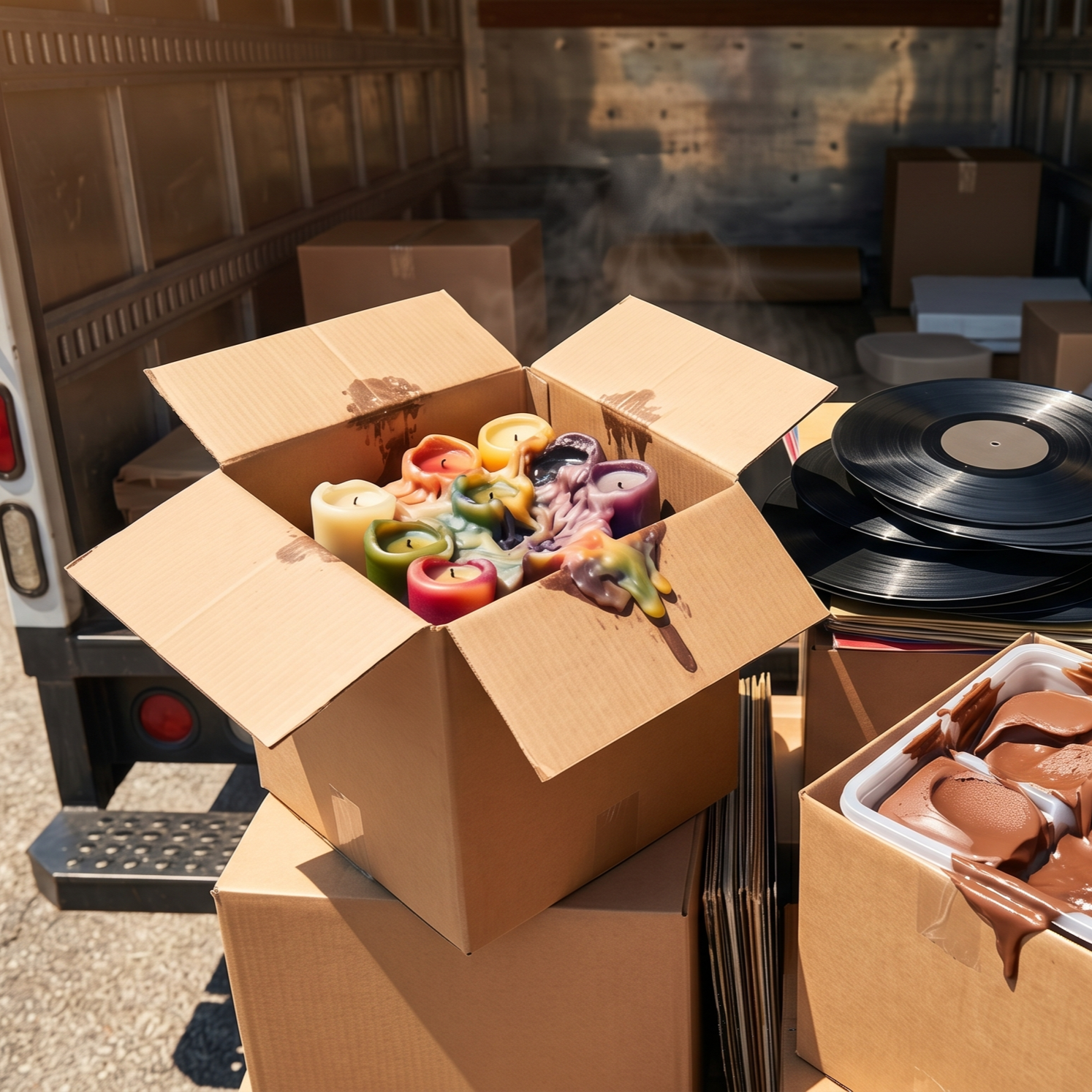
Quick Answer: A moving truck's cargo box has no climate control and can reach well over 120°F inside on a hot summer day, which is enough to melt, warp, or ruin heat-sensitive items. At-risk things include candles, crayons, electronics, vinyl records, certain medications, cosmetics, houseplants, artwork, and some foods. The fix is to keep those items out of the truck: move them in your own air-conditioned vehicle, pack them last and unload them first, use a cooler for the most fragile, and schedule loading for the cooler morning hours when you can.
You load the truck on a July morning in Houston, drive a few hours, open the cargo door at the new place, and a box of candles has fused into one waxy lump, the chocolate is soup, and your record collection has a gentle warp to it. A moving truck in a Texas summer is essentially a metal oven on wheels, and a lot of ordinary belongings don't survive the ride. Knowing what's vulnerable and keeping those few things out of the heat saves you from opening boxes of ruined possessions at the other end.
Why a Moving Truck Gets So Dangerously Hot
A moving truck's cargo area isn't air-conditioned, isn't insulated, and is usually a sealed metal box with no airflow. Parked or driving in direct sun, it behaves like a closed car in a parking lot, except bigger and darker inside. On a hot Texas afternoon, the temperature inside that box can climb far above the outdoor temperature — easily past 120°F, with higher readings near the walls and roof. Add Houston's humidity, and you've got heat plus moisture working on your belongings for the whole trip.
That matters because heat damage isn't only about the peak temperature; it's about how long things sit in it. A short errand is one thing, but items can bake in a loaded truck for hours during loading, driving, and unloading, and that sustained exposure is what melts, warps, and degrades them.
What's Actually at Risk
Some belongings shrug off heat; others are quietly ruined by it. The vulnerable list is worth knowing, so you can pull those specific items aside.
| Category | Examples | What heat does |
|---|---|---|
| Meltables | Candles, crayons, lipstick, chocolate, some cosmetics | Melt and fuse together |
| Electronics | Laptops, TVs, game consoles, phones, batteries | Components and batteries damaged or degraded |
| Media | Vinyl records, cassettes, photos, film | Warp, stick together, fade |
| Medications | Many prescriptions, insulin, supplements | Lose potency or spoil |
| Living things | Houseplants, pets (never in the truck) | Wilt, die from heat |
| Art & wood | Paintings, wooden instruments, fine furniture finishes | Crack, warp, finish damage |
| Perishables | Food, wine, certain liquids | Spoil, expand, leak |
Electronics deserve special caution. Heat can degrade batteries and sensitive components, and a laptop or TV that's been sitting at 130°F for hours may not show damage immediately, but can fail sooner than it should. Medications are the most important to protect for safety reasons — many lose effectiveness when they overheat.
Never transport pets — or leave them waiting — in the cargo area of a moving truck, and never in a parked car in summer heat. The temperatures reach lethal levels quickly. Pets ride with you, in the air-conditioned cab of your own vehicle.
How to Protect Heat-Sensitive Items
The core strategy is simple: the vulnerable items don't go in the hot truck at all. A few practical habits handle almost everything.
Move the sensitive things yourself, in your own air-conditioned vehicle. Electronics, medications, important documents, candles, and anything irreplaceable ride in the car with you where it's cool. For the most fragile or perishable items, a cooler — even without ice, just as an insulated box — buffers them from the worst heat.
When something heat-sensitive must go in the truck, pack it last so it comes off first, and keep it away from the hot metal walls and roof, toward the center of the load. Load and unload during the cooler parts of the day when you can; an early-morning load beats a mid-afternoon one by a wide margin. And don't let a loaded truck sit in the sun longer than necessary — the longer it bakes, the worse the exposure.
Pack a clearly labeled "ride with me" box for the car: medications, chargers and small electronics, important papers, and anything that melts. Loading it into your own vehicle first means the heat-sensitive essentials are protected before the truck is even opened.
Plan the Timing Around the Heat
Beyond what goes where, when you move matters. A summer move loaded in the cool of the morning, driven efficiently, and unloaded promptly exposes your belongings to far less cumulative heat than one that drags into the afternoon. Houston summers also bring sudden storms, so building a little timing cushion protects against both the heat and a downpour catching an open truck. Professional movers who work in this climate plan around it as a matter of routine, which is part of why a heat-season move goes more smoothly with crews who handle it every day. They know to keep the truck moving rather than letting it idle in a parking lot, to stage the load so the most heat-sensitive boxes come off first, and to work quickly through the hottest stretch of the job. That kind of planning is hard to replicate on a rushed, last-minute self-move, which is exactly when belongings end up sitting in a baking truck far longer than they should.
Frequently Asked Questions
Much hotter than the outside air. A sealed, uninsulated cargo box sitting in direct sun behaves like a closed car, and on a hot Texas day, the interior can climb well past 120°F, with the air near the metal walls and roof hotter still. Because items sit in that heat for hours across loading, driving, and unloading, the sustained exposure is what causes the damage.
The clearest "keep them with you" items are medications, electronics, candles, and other meltables, important documents, irreplaceable valuables, and, of course, pets and plants. These either suffer real damage from heat or, in the case of medications and pets, raise safety concerns. Moving them in your own air-conditioned vehicle is the simplest way to protect them.
Yes. Sustained high temperatures can degrade batteries and stress sensitive internal components, and the damage isn't always immediately visible — a device may work at first but fail earlier than it should. Laptops, TVs, game consoles, and anything with a battery are best transported in a cool vehicle rather than left to bake in the truck for hours.
Generally, yes. Loading and unloading in the cooler morning hours reduces the amount of heat your belongings and your crew are exposed to, and it gets the truck off the hot afternoon road sooner. Mornings also tend to come before Houston's afternoon storms. Scheduling the heaviest work early is one of the easiest ways to make a summer move safer and more comfortable.
Movers who work in a hot, humid climate plan around it routinely — advising which items should travel separately, protecting belongings during loading, working efficiently to limit time in the heat, and timing the job to avoid the worst of the afternoon. Their experience with summer conditions is part of what keeps heat-sensitive items safe compared with a rushed, unplanned DIY move in peak heat.
Keep the Vulnerable Few Out of the Oven
Most of your belongings will ride out a Texas summer move just fine, but a specific handful — candles, electronics, media, medications, plants, and perishables — can be ruined by hours in a 120-plus-degree truck. The whole solution is to keep those items out of the cargo box: move them in your cool vehicle, pack them last and unload them first, and load during the cooler hours. Plan around the heat, and you open your boxes to intact belongings instead of melted ones.
Planning a summer move and worried about the heat? — Get experienced local movers who protect your belongings and plan around Texas conditions. Timeless Moving LLC serves Katy, Cypress, Sugar Land. Call (346) 489-5383.
