
Apartment and High-Rise Moves: The Details That Slow Them Down
A move out of a house is mostly a question of how much stuff there is. A move out of an apartment or a high-rise adds a second variable that has nothing to do with your belongings: the building itself. A vertical ride that only fits one dolly at a time, a loading dock with a two-hour reservation window, or a building rule nobody mentioned until moving day can add hours to a move that would otherwise be simple.
Why Buildings, Not Boxes, Usually Cause the Delay
In a house, a mover walks straight from the front door to the truck. In a multi-unit building, that same walk might involve a hallway, a ride up or down between floors, a lobby, and a loading zone that's shared with every other resident and delivery in the building that day. Each of those extra steps is a place where a move can stall, and most of them are set by the building's own rules rather than anything the moving crew controls.
Passenger Car vs Freight Car: Why the Difference Matters
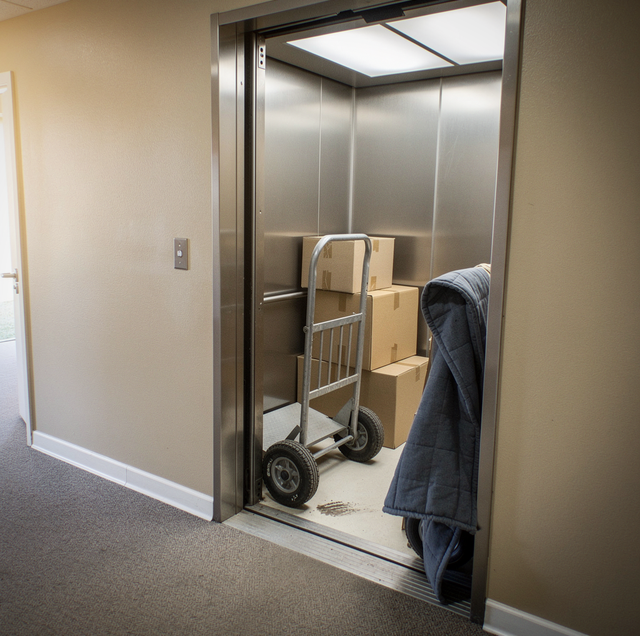
Most multi-story buildings sort vertical transport into two types: a passenger car, shared with residents heading to their own units, and a freight car, reserved for deliveries, contractors, and move-ins. A dedicated freight car makes upper-floor moves considerably faster, as it is typically larger, has thicker interior padding built in, and doesn't require holding up other residents trying to reach their own floor. A passenger car, by contrast, usually means the crew has to wait between trips, load fewer items per run to leave room for other riders, and sometimes work around a posted weight limit.
Reserve the car ahead of time: Many buildings, especially high-rises, require residents to book a specific window with building management, often two hours or more, and moving without a reservation can mean getting bumped by another resident who did book one.
Confirm which car movers are allowed to use: Some buildings restrict movers to the freight car only, even if the passenger car is closer to your unit, so confirming this ahead of time avoids the crew defaulting to the wrong one and getting stopped by building staff.
What a Certificate of Insurance Has to Do With Your Move
Many apartment complexes and just about every high-rise require a certificate of insurance, often called a COI, from the moving company before movers are allowed past the lobby. This is a standard document in the moving industry that verifies liability coverage is in place, and building management typically wants it submitted to their office at least a few business days ahead, not handed over the morning of the move. Skipping this step is one of the more common reasons a crew gets turned away at the front desk after already showing up with a full truck.
Protecting Hallways, Doorframes, and the Car Interior
Shared hallways and the inside of a passenger or freight car take more wear during a move than a private house ever does, and building management usually notices. Corner guards on doorframes, floor runners in carpeted hallways, and moving blankets clipped over the car's wall panels protect surfaces that aren't yours to damage and that you may be billed for if they are. A crew working an upper-floor move typically pads the car's interior before the first load goes in, rather than after the first scuff shows up.
Parking, Loading Docks, and Building Access Hours
A loading dock shared by dozens of units operates more like an airport gate than an open parking lot: there's often a booking system, a time limit per vehicle, and a queue if another resident's delivery runs long. Confirming the building's loading dock hours and any reservation process before moving day prevents the truck from circling the block looking for a legal place to park while the reserved window ticks away. Buildings without a dock at all sometimes restrict large trucks to a specific curb or alley entrance, which is worth confirming with the leasing office rather than assuming street parking will be available.
Stairs-Only Buildings: What Changes
Not every apartment building has vertical transport for residents, and walk-up buildings of three or four stories are common in many markets. Without it, every item makes the trip on someone's back and up a stairwell, which adds meaningfully to handling time compared to a ground-floor unit, often close to double on a third- or fourth-floor walk-up, and changes which crew size makes sense. A stairs-only third- or fourth-floor unit typically requires one additional mover compared to the same-size unit on the ground floor, simply to keep the trip count from stretching the day out. Movers on a stairs-only job also tend to rely more on backpack-style straps and stair-rated hand trucks with locking wheels, since a standard dolly can roll away on a landing if it isn't held firmly on every step.
Frequently Asked Questions
Most high-rises want the reservation made at least a week ahead, and buildings with heavy move traffic, like large complexes near a college or a fast-growing area, can book out even further, so it's worth calling the building office as soon as a move date is set rather than waiting until the week of.
Some buildings simply push the move to the next available date, but others will accept a certificate emailed directly from the moving company's insurance provider if it arrives before the truck does, sometimes within the same business day. It's worth asking the building office specifically whether a same-day electronic COI is acceptable, since that policy varies a lot between properties, and getting a yes ahead of time beats finding out the hard way on moving morning.
Not necessarily. A studio on a high floor served by a single small car can take as long as a one-bedroom on the ground floor, since the bottleneck is often the building's access rules rather than the volume of belongings.
Often yes, since that's frequently the same car referred to as the freight car, but it's worth confirming with the building whether trash pickup or another scheduled delivery might be using it during your reserved window.
Moving out usually has a fixed reservation window to work within, since the building already knows your unit and access needs, while moving in often adds an extra step of registering as a new resident with building security before movers are cleared to even enter the lobby.
It can happen, which is why it's worth documenting the hallway and car interior, and any existing scuffs or marks with photos before the move even starts. Having a clear record of the building's condition beforehand is a simple habit that protects you if a dispute over damage ever comes up afterward.
Most of what makes an apartment or high-rise move harder than a house move has nothing to do with your furniture and everything to do with the building's own rules. Handle the car reservation, the insurance paperwork, and the loading dock logistics ahead of time, and the actual moving part goes about as smoothly as any ground-floor job.
Get a crew that's experienced with building rules, loading docks, and COI requirements — book your apartment or high-rise move. Timeless Moving LLC serves Katy, Cypress, and Sugar Land. Call (346) 489-5383.
