
How to Move Houseplants: What Actually Kills Them in Transit
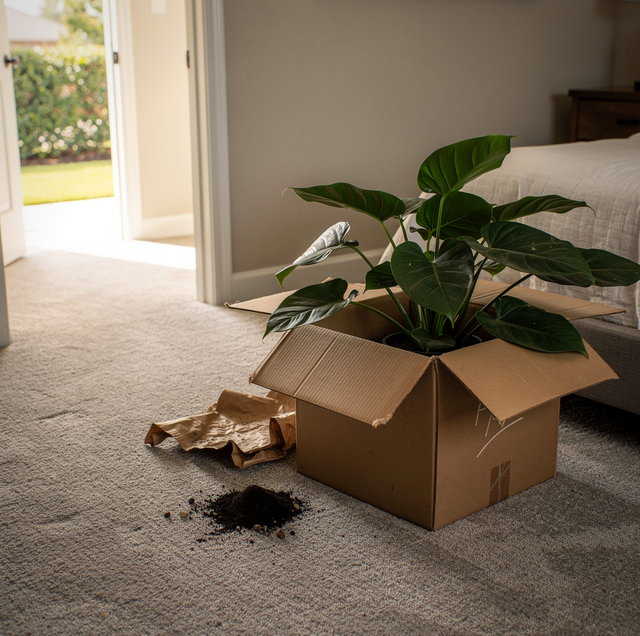
Quick Answer: Temperature does the fastest damage to a moving houseplant. Darkness is the risk people worry about most and should worry about least. Mechanical damage- a tipped pot, spilled soil, a snapped stem- is what actually arrives broken.
The fern that has sat by the same window for three years spends moving morning standing in a cardboard box on the driveway, then several hours in the back of a car, then another stretch on a curb before anyone carries it back into light. Nothing about that day looks dangerous. No one drops the box, no one forgets to water it the week before. And yet a plant that survived a move by pure luck last time can come apart on the next, because nothing about a moving day is built around what a plant can take.
Start with the fact that changes the whole job: a moving crew generally will not take live plants. They sit on essentially every van line's non-allowable list, alongside pets and anything else alive, so no amount of careful boxing gets a fern onto the truck. Every plant you keep rides in your own vehicle, packed by you and watched by you the whole way. That is exactly why the details matter here.
Temperature Does the Fastest Damage in a Closed Car
Pothos, philodendron, most ferns, palms, and peace lilies all come from warm, humid forest understories. Those species evolved in a narrow, stable temperature band, and a car sitting in a driveway does not hold a narrow, stable anything. Left alone, a closed vehicle can swing dozens of degrees over the course of a single loading day, hot in direct sun and cold again once the sun drops.
Cold is the faster of the two threats. Once temperatures fall toward the low 50s, these warm-origin plants start experiencing what horticulturists call chilling injury, cell damage that begins well above freezing. The harm shows up as blackened or water-soaked patches on the leaves, and it can set in within hours, long before the car reaches the new address. Heat does damage too, mostly by drying the plant out faster than its roots can replace the water, and a wilted plant that reaches water quickly often recovers. Chilling injury heals far more slowly, if at all.
Set a cheap indoor thermometer beside the plants on the back seat. If it drops toward the low 50s Fahrenheit, turn the heat up then, because chilling damage only shows on the leaves after it has happened.
Darkness Is the Constraint Worth Worrying About Least
A plant makes its own food through photosynthesis, which requires light, but it also stores sugar reserves for periods when light is not available: night, an overcast week, a closed box. Commercial plant nurseries rely on that reserve every day: healthy stock routinely ships in sealed, lightless cartons for two full days and arrives in normal condition, though those shipments run temperature-controlled, and that is the part doing the work. Darkness on its own slows the plant's growth and water use and leaves the tissue alone. Days in an unheated, uncooled trailer do kill plants, and temperature is what does it.
A move rarely asks more of a plant than that. Loading, the drive, and unloading add up to hours for most local moves and at most a day or two for a longer one, well inside what a healthy plant handles on stored reserves alone. The real problem is what people do to compensate for the dark, wrapping a box too tightly or leaving it sealed for days past arrival out of caution. Past the two- or three-day mark, reserves start to run low, and older leaves begin to yellow and drop. Up to that point, the box itself is a minor risk next to temperature and rough handling.
A Tipped Pot Is What Usually Arrives Broken
The damage that shows up at the other end is usually mechanical, not climatic: a pot that tipped, soil that spilled, or a stem that snapped. All three trace back to the same two facts about how a potted plant is built.
A potted plant is top-heavy by nature: most of its weight is foliage stacked well above a narrow base, so a pot that can slide even an inch tips the rest of the way over with almost no resistance. Once it tips, the growing medium goes wherever gravity takes it, working its way through the drainage holes, over the rim, and into the seams of every nearby box, taking root contact with it. And a stem is nowhere near as tough as it looks. A box that shifts an inch during a hard stop and presses into a plant's canopy crushes leaves and snaps stems at the exact point where they meet the crowded box beside them.
Prune Two Weeks Out, and Wait to Repot
Two weeks before moving day is enough time to prune without further stressing the plant. Cut back dead growth, awkward, long stems, and anything that reaches well past the plant's main shape. A more compact plant fits a smaller, more stable box, has less foliage exposed to snag on a passing box, and spends less energy maintaining leaves it would likely lose to stress anyway.
Repotting is a different question, and the timing matters more than most people expect. A freshly repotted plant is already coping with torn root hairs and unsettled soil, a real but manageable stressor in its own right. Add a move on top of that disruption, temperature swings, jostling, days without familiar light, and the plant ends up recovering from two separate shocks at once. The plant handles the move better in the pot and soil it already knows, even if that pot is a size it will outgrow soon. Save the fresh soil and the bigger pot for after the plant has settled into the new house and is back to growing normally on its own.
How a Plant Gets Packed for the Car
Packing a plant is mostly about immobilizing the pot inside a snug box. Set the pot into a box sized close to its diameter, then wedge crumpled paper or packing material into the gap around the base until the pot cannot slide or rock inside the box. The plant itself should never be taped down or bound tightly; it needs to sit loosely on a base that cannot move.
The soil surface needs its own cover. A sheet of plastic wrap pressed gently over the top of the pot, or a grocery bag gathered and taped loosely around the stem, keeps loose soil from working its way out through vibration during the drive, the same shifting that spills it into the seams of every box nearby. For the foliage, choose a box a size or two taller than the plant so the flaps close without pressing on the leaves. For a tall plant, wrap the canopy loosely in a cone of paper so branches cannot splay into whatever is packed beside them. Plants travel best upright and loaded last so they come out first, since standing a pot on its side shifts both soil and roots in the wrong direction, and the less time a plant spends wedged under luggage, the less time it spends out of reach when the cabin needs adjusting.
Where in the Car a Plant Rides, and What the First Week Decides
Inside the car, the cabin beats the trunk. A trunk sits sealed and out of sight, with no air moving through it and no way to feel what it has climbed or dropped to, while the cabin stays with the driver, who can run the heat or the air conditioning as conditions demand. Anything with thin, high-moisture leaves, calatheas, ferns, most warm-climate foliage plants, and anything already stressed from the two weeks before the move, belongs on a back seat or a footwell where someone can feel the temperature it is sitting in.
A parked car's interior climbs about 20 degrees in ten minutes and more than 40 within an hour, even in mild weather. Cracking a window changes little. Take the plant with you, or park in shade and keep the stop short.
If the move crosses a state line, some states restrict which plants and soil can cross with a household, and the rules differ by state and sometimes by plant type. Check the destination state's department of agriculture well before moving day.
Arrival matters as much as the drive itself. Bring plants inside and unpack them as soon as you get there, then set them somewhere with bright, indirect light for the first stretch. A leaf that spent days in a dark box has had no chance to build its normal tolerance for direct sun, and a sudden jump into full light can scorch tissue that would have handled the same sun perfectly well a week earlier.
Not every plant is worth putting through all of this. A collection built over years, or a plant too large to replace easily, earns the careful box and the space in the car. A plant that is inexpensive, easily replaced, or too large and awkward to protect properly might be better off as a cutting carried in a damp bag than as a five-foot pot wedged into a back seat.
Frequently Asked Questions
Water two to three days before the move. Soil that is still soaking wet on moving day adds unnecessary weight, and water pooled in the saucer or draining out the bottom during the ride can soak through a cardboard box or whatever is packed next to it. By the third day, the roots have taken up what they need, and the excess has already drained.
Skip it on both ends. Fertilizer promotes new growth, and a plant needs all its spare energy to handle the trip itself, since tender new growth is especially sensitive to the same temperature and light swings that threaten the rest of the plant. Wait until the plant is back on a normal watering rhythm in its new spot and showing new growth on its own, the sign it has spare energy to use again.
Move it the way you would move any heavy, awkward furniture: on a hand truck or furniture dolly, with the strap holding the trunk and pot together, leaving the foliage free. Two people should lift a plant that size, taking the weight from underneath the pot, since the trunk and stems are the point that snaps first under strain.
Yes, and it usually heals on its own without lasting damage. Vibration, handling, and the stress of new conditions all trigger a plant to shed buds or fruit it lacks the spare energy to hold on to, a response separate from any leaf damage. Most houseplants that lose buds this way rebloom on their normal schedule once they have settled into the new spot.
Treat and isolate that plant before it goes anywhere near a box with anything else. A sealed moving box is an enclosed space, and spider mites or fungus gnats on one plant can spread to every other plant riding in the same car or sitting near it at the new address. A few days of treatment before moving day beats dealing with an infestation across an entire collection afterward.
Watch the two weeks before the move for wilting, yellowing on older leaves, or leaves dropping with no clear cause. A plant already showing that kind of stress is operating on a thinner margin than a healthy one, and the jostling and temperature swings of a move can push it past the point where it recovers easily. Give a struggling plant a few extra weeks of stable care first, if the timeline allows, or plan for it to need a longer recovery window than the rest of the collection once it arrives.
Moving a home full of plants and everything else? — Get a careful local crew that treats your load like it matters. Timeless Moving LLC serves Katy, Cypress, Sugar Land. Call (346) 489-5383.
