
How to Move With Pets Safely, Not Just on Moving Day
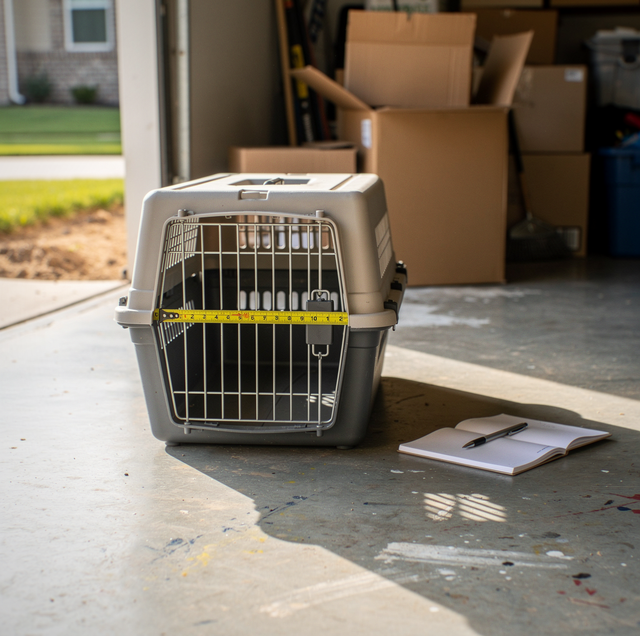
Read the size printed on the carrier label in your garage, then measure the animal it was bought for. That rating was matched to a body that has since put on weight, grown into an adult frame, or stiffened at the hips, and a move is the first trip in years long enough for the difference to matter.
The rest of a pet move runs the same way. What move day asks of your animal takes shape in the weeks leading up to it, while the household is busy with boxes and the pet is working out that its routine has come apart. What the new house asks comes from whoever last lived in it. The drive between them is the shortest stretch of it.
The Routine Breaks Before the Furniture Does
A household counts down to a date. An animal counts nothing and registers the move as a run of small wrongnesses, from the spare room filling with boxes to the chair your dog sleeps under shifted eight feet left. None of it looks like moving to the people doing it. To the pet, it has been the move for weeks.
The ASPCA's moving guidance asks for the boxes to be brought into the house early, so that tape and cardboard stop being novel before they matter. It also asks that the pet be kept in a familiar room you plan to pack up last, which means picking it now, before the packing order falls to whoever is fastest.
One thing holds steady through all of it: the schedule. Feeding times and the hour the house goes dark are the last fixed points in an emptied home, and the ASPCA asks that your pet's routine be kept as normal as the process allows. Holding them takes no effort and leaves the animal with its one piece of evidence that the household is still running.
Sorting the Carrier and the Contact List Early
A carrier that has only ever come out for veterinary appointments carries that association, and move day is a poor time to find that out. Fit gets checked in those same weeks rather than in the driveway. Veterinary guidance on crate sizing for an animal flying in a cargo hold sizes the carrier by height before floor area: the animal has to be able to stand in it without touching the top, and then to turn around inside it. That rule is written for air travel and not for your car, and it is still the plainest fit test available.
The other preparation is a phone number, best found while your own phone is quiet. Veterinary travel-packing guidance for a dog or cat asks that emergency information travel with the animal, and the item on it that takes real work is a 24-hour emergency veterinary hospital at the destination. Finding one means looking up a clinic in a place you have not lived yet and checking that it takes patients overnight, a short job on a Tuesday and an impossible one at eleven at night.
Save the destination's 24-hour emergency vet in your phone and on a card taped to the carrier, next to your pet's medication list, so whoever is holding the animal on moving day can make that call.
The Hours the Doors Stand Open
Loading and unloading both run with the front door open. Furniture goes out in a steady stream, and for hours the boundary between house and street is a doorway nobody watches. An animal that has never once tried to leave your house will leave under those conditions, because what it is escaping is inside.
The closed room follows from that. The ASPCA is direct about it: on moving day, keep pets in a quiet room with the door shut, or at a friend's house, so a frightened animal cannot bolt while the movers load. A closed door and a latched door are different things on a day of furniture passing by, and a sign taped to the outside of yours stops the next person from opening it.
Crew coordination is one short conversation that protects both sides. A loose animal in a loading path is a hazard to the person carrying the weight as much as to the animal itself, since a loaded dolly cannot stop for a cat, and someone stepping around one on a staircase is stepping wrong. Tell whoever is leading the move where your animal is, once, at the start.
Set Up the First Room Before the Animal Arrives
The room at the new address gets chosen before the truck does anything, and it gets chosen on physical grounds. It needs a door that latches from the hallway side and a window whose screen you have already pushed on from the inside.
The ASPCA calls that room the home base and asks that the animal adjust to it alone before the rest of the house opens up. It holds the pet's bowls and bedding, brought from the old house rather than bought new for the new one.
The room goes in before the ramp comes down. Setting it up after the truck is empty means the animal spends the entire unload somewhere, and every somewhere available at that point is worse than a room ready before the first box came through the door.
Then the house opens slowly. The ASPCA's settling-in guidance keeps some doors shut as the pet is introduced to other rooms, giving you control over the pace. A household that opens everything on the first evening has given away its own ability to slow down.
Latches and Screens Nobody Has Tested Yet
A house you have lived in has already had its weak points identified. A house you have owned for four days has not. The ASPCA's pet-proofing list for a new home asks that nooks where a pet could get stuck be plugged and that all windows have secure screens, and that the screens be kept from walking through with a hand. A screen sits in its frame under spring pressure and little else, so a cat leaning on one from a first-floor sill can put it into the flowerbed, and the household finds out by walking into an empty room.
Interior doors are the other half. A door that swings shut behind an animal and latches has shut it in a room with no water, and the doors that do it are the ones with no furniture holding them open. The door to a garage or utility space warrants a deliberate check on the first evening, and so does the gap behind a built-in appliance that nobody has slid out since it was installed. Both are quick checks skipped because the boxes feel more urgent.
Floor Level in a House Somebody Else Just Left
A house your household has lived in for years has been cleared at floor level over and over without anyone calling it that. A house you took the keys to on Friday has not been cleared at that level once.
The sweep runs the way a released animal covers a room, doorway outward and low first: the cabinet under the sink, then the strip behind the range, then the floor of the broom closet. Whoever lived there wiped at eye height and cleaned for a viewing, so what stays behind sits under all of it, bait stations and traps set for something else included.
The rest of what waits down there belongs to the animals who lived in the house before yours. Scent soaks into the carpet under where a bowl stood and into the bottom few inches of wall behind it, and it survives a cleaning that satisfies a buyer. Your pet finds it within the first minutes it is loose, at nose height and partly in its mouth.
So the sweep happens before the carrier door opens. It is quick work, and the part easy to skip is opening each low cabinet and looking at its floor rather than its shelf.
Frequently Asked Questions
Weeks rather than days, and the ASPCA's road-trip guidance gives the sequence. Put your pet's food bowl inside an open crate first, then work up to meals eaten in it with the door shut. Carrying the animal around the house in it and a short drive come after that. Each step adds one thing the pet has not agreed to, so starting the week of the move gets you through none of them.
In the home-base room first, alongside the bowls and bedding, because that is the only room your cat has reason to trust on the first night. It need not stay there. The ASPCA's settling-in guidance gradually moves the box toward its permanent spot, about a foot a day, so the cat keeps finding it where it expects to find it. Shifting it across the house in one go removes the only fixed point it has.
Yes, apart from the parts purely about distance. A move across town still has a front door standing open for hours at the old address and again at the new, still puts strangers in every room your pet knows, and still ends in a house whose floor nobody has checked. A short move saves you the water stops and the overnight planning. The two ends do not shrink with the drive.
The line where the fence meets a change in grade, first, because a fence built level across a sloping yard leaves a triangle of daylight at the low end that your dog finds before you do. Then the gate. A gate that latches under its own weight and one that needs a hand pushed home look identical from the patio and behave differently in wind. Walk the run with the gate shut behind you.
Because it is the only object arriving at the new house that smells right to your pet. A bed or a mat carries the scent of a home the animal is about to lose, and washing it the week before the move throws away the one thing that transfers intact. Put it in the home-base room before the animal goes in, and leave the laundry until the new house has its own scent.
The certificate is a document your veterinarian signs at the appointment and hands to you; the chart entry is that practice's note of the same event. They are different records: the chart moves between practices while the certificate stays with you. A certificate of veterinary inspection is a third document and requires a federally accredited signature. Whether your move needs any is a question for your vet and the animal-health authority at your destination.
A pet's whole day gets planned around the hours the doors stand open at each address — and that window moves with the crew size and the room order, both of which get agreed at booking rather than on moving morning. Timeless Moving LLC serves Katy, Cypress, and Sugar Land. Call (346) 489-5383.
