
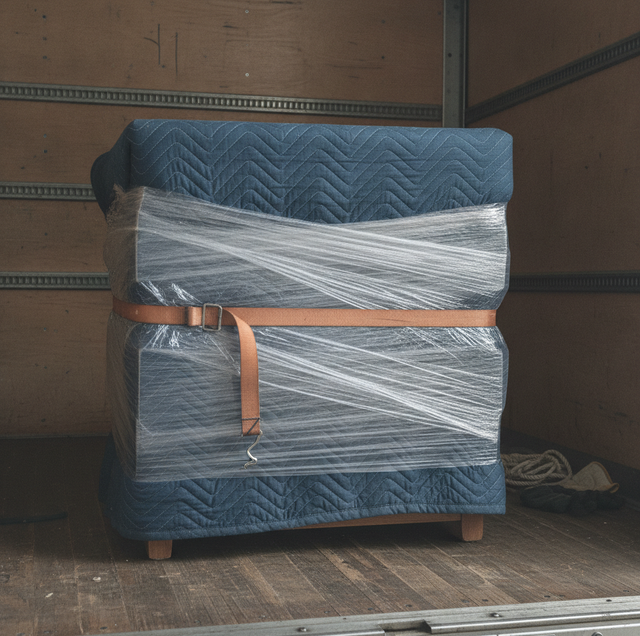
Quick Answer: Furniture gets hurt three ways: it hits or scrapes something, it gets crushed under weight, or it shifts around in a moving truck. Beat all three with the right materials (moving blankets, then stretch wrap, plus corner protectors), by taking apart what comes apart, and by loading heavy pieces first, tight, and strapped so nothing slides.
Look at a piece of furniture that arrived at a new home damaged and you can usually read the story off the wound. A bright white scrape down a dresser side is a doorway it clipped on the way out. A cracked table leg got caught on something while the heavy top kept swinging, and the joint gave. A dented sofa cushion with a truck-floor pattern pressed into it spent the drive under a box that had no business being there. Furniture rarely breaks from bad luck. It breaks down into three specific things, and once you know what they are, protecting a houseful of it stops feeling like guesswork.
The three culprits are impact and scraping, pressure from stacking, and shifting in transit. A move is basically a few hours in which all three get their chance. The truck accelerates, brakes, and leans through every turn, so anything loose slides and knocks into its neighbors. Anything stacked wrong gets crushed by the weight above it. And every doorway, stair rail, and truck-ramp edge is waiting to catch a corner. Protecting furniture means shutting down all three, and that comes down to three habits: the right materials, taking things apart, and a deliberate loading order.
Start by Taking Apart Whatever Comes Apart
The instinct is to move furniture as a whole because it seems like less work. Usually, it is more work and more risk. A dining table carried on its legs is a long lever, and the legs are the weakest, most exposed part. Every time that top swings or catches, the force multiplies down at the joint where the leg meets the apron. Take the legs off, and you are carrying a flat slab and four sticks, both of which pack flat and neither of which can snap.
So before anything gets wrapped, walk the house and disassemble what the manufacturer let you disassemble. Table legs come off. Bed headboards and footboards are separate from the frame. Knobs and pulls that stick out and snag can be unscrewed. Shelves lift out of bookcases so they do not slide and shatter their pegs. Drawers either come out to lighten a dresser and move separately, or, if they are the kind that do not lift free, get secured shut so they cannot roll open and swing on the ramp. A dresser that loses a drawer down the stairs is a bad afternoon.
The one part people skip is keeping the hardware straight, and it is the part that turns reassembly into a two-hour puzzle. Bag the screws, bolts, and brackets for each piece separately, and label the bag with the exact piece it belongs to. More on where that bag should live in a minute.
Layer the Materials in the Right Order
Wrapping is where most well-meaning moves go wrong because plastic looks like protection, but it is only half the story. Stretch wrap holds things together and blocks dirt, but it does almost nothing to cushion a corner against a door frame. That is the job of moving blankets, also called furniture pads, the thick quilted covers that soak up an impact before it reaches the wood.
The order matters. For hard surfaces, wood dressers, tables, cabinets, leather sofas, the blanket goes on first, wrapped around the piece, and then the stretch wrap goes over the blanket to hold it snug. The blanket is the padding; the plastic is the tape that keeps the padding from falling off. Corner protectors, the molded plastic or cardboard caps, go on the corners of tables and dressers before the blanket, because corners take the worst of every doorway and ramp.
Glass and mirrors are their own category. Wrap them in a layer of paper first so the surface does not scuff, then bubble, then mark the outside so nobody grabs it wrong. Upholstered pieces need protection from a different enemy: not impact so much as dirt and moisture, so a plastic sofa cover or a clean blanket keeps road grime and a surprise rain shower off the fabric. And do not forget the parts of the house that are not furniture. Lay down floor runners or blankets in the walkways and pad the door jambs at the tight turns, because a scraped floor at the old place is as much a loss as a scraped table.
Load the Truck Like You Are Building a Wall
A perfectly wrapped piece can still arrive ruined if it rode the truck badly, because shifting in transit is the culprit that causes the damage. The fix is to load so that nothing has room to move.
Heaviest and squarest first. Dressers, appliances, solid bookcases, and the sofa go in the back of the box against the front wall, standing upright and packed side by side so they brace each other. Build forward from that wall like you are laying bricks, keeping everything tight so there is no gap for a piece to slide into when the truck brakes. Lighter and more delicate items ride higher and later, and the rule that saves the most furniture is simple: never stack anything heavy on top of something soft or delicate. A box of books on a leather cushion presses a permanent dent in the hour it takes to reach the highway.
Then strap it down. Cargo straps or tie-downs run across each tier and anchor to the truck rails so the load cannot lean or topple as a unit. Make sure drawers and doors on anything you did not fully secure cannot swing open in transit. A wall of furniture that is tight and strapped behaves like one solid block, and a solid block does not shift.
Mind the Heat, and Mind Your Back
Two things get overlooked because they are not about wrapping or stacking.
The first is heat. A closed truck box sitting in the sun turns into an oven, and furniture does not enjoy it. Prolonged high heat can soften the glue in wood joints, warp a thin veneer, and leave leather and finishes sweating and tacky. This is a two-sided problem, not a summer-only one: cold makes glue brittle and can crack a finish, while heat softens and warps, so the goal in any season is to limit how long pieces bake or freeze in a parked truck and to keep them padded so nothing presses into a softened surface. On a long haul in warm weather, that padding and a smart load that avoids direct contact matter even more.
The second is you. Furniture is heavy, and the emergency room is full of people who found that out mid-lift. Lift with your legs, not your back; keep the load close to your body, and get a second person on anything awkward. Use a dolly or hand truck for the heavy squares, a dresser, a washer, a loaded bookcase, so the wheels carry the weight and you are only steering. Protecting the furniture is the whole point, but never worth a hurt back.
Frequently Asked Questions
Pad hard wood and leather with a moving blanket first, then run the stretch wrap over the blanket. Plastic pressed straight against a finish can trap moisture underneath, and over a long move that trapped humidity can leave marks or a cloudy haze on the surface that is a pain to buff out. The blanket both cushions the piece and gives the plastic something to grip other than the finish itself.
Taking off legs, headboards, and any protruding parts removes the long lever arms that snap under a swing or a catch. It also shrinks the piece: a table without legs and a bed broken down to panels clear a tight doorway that the assembled version would never fit through, and the flat parts load tighter against the truck wall with far less room to shift.
Bag each piece's hardware separately, label the bag to that exact item, and then tape the bag to the underside of the furniture rather than to a finished face. Taping it under the tabletop or to the bottom of the frame means the hardware travels with its own piece and the tape never touches a surface that shows, so reassembly is not a scavenger hunt through a coffee can of mixed screws.
Wrap it in paper and then bubble, and mark it fragile on both sides so no one guesses. Then carry and load it standing on edge, not lying flat. Flat glass flexes in the middle under almost any pressure, and that flex is what cracks it, while glass stood on its edge is far stiffer and rides against a padded upright wall where nothing can press down on its face.
Spread the heavy pieces so their weight sits over the truck's axle rather than piled all at the tail, which keeps the load balanced on the road. Secure each tier to the wall using the truck's E-track or logistics straps so a whole row cannot lean or topple. Then pack soft goods, bags of linens and loose cushions, into the gaps between pieces so nothing has room to slide on a turn or a hard stop. A load with no empty space cannot batter itself.
Yes. A hot, closed trailer can soften the glue in wood joints, warp veneer, and make leather sweat, and it is rough on anything else riding along, candles slump, and electronics do not love it either. On a long summer haul, that means padding pieces well and loading them so nothing presses into a heat-softened surface and no piece bakes in direct contact with the metal wall.
Book a crew that wraps, disassembles, and loads it right — so your furniture arrives whole. Timeless Moving LLC serves Katy, Cypress, and Sugar Land. Call (346) 489-5383.
