
What Items Won't Movers Transport? The Non-Allowables List
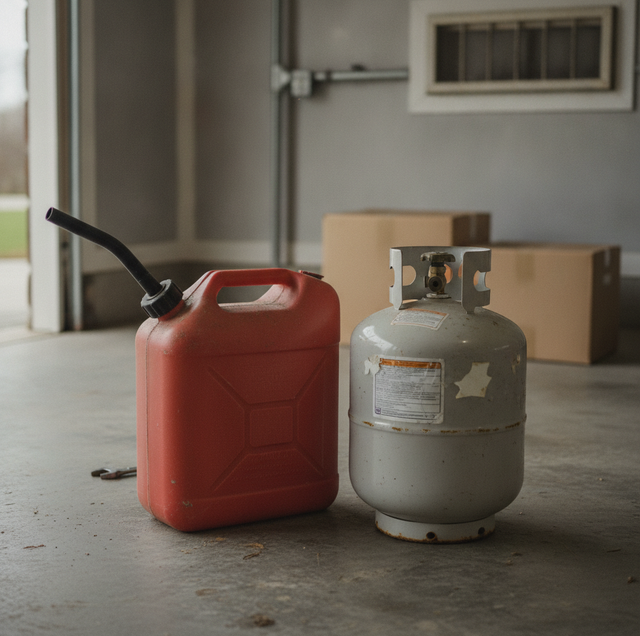
Most of a household rides on a moving truck without a second thought. A short list cannot, and the box the crew sets aside on loading day is almost always something you could have handled a week earlier: a half-full gas can, a propane tank, a shelf of pool chemicals, the plants by the window. Movers call these the non-allowables, and knowing the list ahead of time turns a loading-day headache into a quick errand before the truck arrives.
The Reason Certain Items Stay Off the Truck
Movers are not being fussy when they decline something. The list comes down to three things: safety, damage, and replaceability. A sealed trailer with no climate control heats and cools as the day runs, and cargo shifts every time the truck brakes or turns. Items that leak, ignite, spoil, or can never be replaced do not belong in that environment, and federal rules restrict hazardous materials on top of any company's own policy. Sorting these items out yourself is a simple swap: a few things leave the truck, and nothing gets turned away at loading.
Hazardous Materials, the Largest Category
The bulk of the non-allowables list is anything flammable, explosive, corrosive, or under pressure. That covers more household items than people expect: gasoline, kerosene, lighter fluid, propane, and other compressed-gas cylinders, aerosol cans, paints, thinners, varnish and solvents, pool and lawn chemicals, fertilizers, pesticides, harsh cleaners, ammunition, fireworks, matches, charcoal, and lead-acid batteries such as the one in a car or riding mower. A nearly empty gas can still count, since the vapor left inside is the flammable part.
None of this rides safely in a packed trailer, so draw the list down before moving day. Liquids you can finish, finish; a can of paint you meant to use is better on a wall than in a box. What is left goes to a household hazardous-waste drop-off, which most counties and cities run as a permanent site or periodic collection event that takes paints, solvents, chemicals, and pesticides in household quantities. Propane tanks are their own errand: full or partial cylinders go through a propane exchange cage at many hardware stores and gas stations, where you swap the tank rather than move it yourself.
| Non-allowable | How to handle it before the move |
|---|---|
| Gasoline, kerosene, lighter fluid | Use up, or drain into an approved container for hazardous-waste drop-off |
| Propane and compressed-gas cylinders | Swap at a propane exchange; never load or bury |
| Paints, thinners, solvents, varnish | Finish the job or take it to the hazardous-waste collection |
| Pool, lawn, garden chemicals, pesticides | Hazardous-waste drop-off in original labeled containers |
| Ammunition, fireworks, matches, charcoal | Transport separately yourself or dispose per local rules |
| Car and mower batteries (lead-acid) | Recycle at an auto-parts store or battery retailer |
Power Equipment Needs Draining First
Lawn mowers, string trimmers, chainsaws, pressure washers, generators, and leaf blowers move fine, but not with fuel and oil in them. Any gasoline left in the tank or carburetor makes the machine a flammable item that can slosh or leak inside the truck, so the crew will refuse it. Empty the fuel system a few days ahead so fumes clear and the mower loads as ordinary cargo. The step-by-step is in the FAQ below.
Food, Plants, and Anything Living
Perishable food is off the truck for a plain reason: it rots. Frozen, refrigerated, or fresh items spoil in an unconditioned trailer, and once they leak, they draw pests and taint everything nearby, which is why open packages get declined even when not perishable. Draw the fridge and pantry down in the last week or two, cook through what you can, donate unopened shelf-stable goods, and toss the rest so the appliance travels clean and empty.
Live plants usually stay off as well. Days in a dark trailer rarely leave a plant alive, and moving greenery across state lines runs into agricultural rules meant to stop pests and diseases from hitching a ride between regions. For a local move, plants ride fine in your own car. Pets never go in the cargo area; they travel with you in the cabin.
The Box You Carry Yourself
One category is less about what a mover cannot take and more about what you should not hand over. Passports, birth certificates, Social Security cards, vehicle titles and other ownership papers, financial and legal documents, cash, jewelry, prescription medications, and small irreplaceable keepsakes belong in a bag that stays with you. A crew can carry a jewelry box, but if a document or an heirloom goes missing in a truckload of identical brown boxes, there is often no getting it back. Pack this box last and load it in your own vehicle.
Handling the List Before Loading Day
The non-allowables are predictable, and each has a home other than the truck: chemicals and paints to hazardous-waste collection, propane to an exchange cage, fuel drained from the mower, perishables eaten or donated, plants and pets in your car, and the valuables in a box on your lap. The heat only sharpens the point. A trailer bakes in a hot summer, but even in cooler months, the interior swings warm in afternoon sun and cold overnight, and either extreme raises the pressure in an aerosol or propane cylinder and speeds up a leak. Handling these items before the crew arrives keeps loading day to the boxes that were always meant to travel.
Frequently Asked Questions
Yes, and several cost nothing. Many paint retailers and home centers run take-back programs for leftover paint, and battery counters at auto-parts and hardware stores accept single-use, rechargeable, and lead-acid batteries. A neighbor who is staying often welcomes a nearly full jug of pool chlorine, weed killer, or fertilizer, emptying a shelf without a trip. Leave anything you give away in its original labeled container so whoever takes it knows what they are handling.
The crew catches most of it on load day, not at the destination. Movers are trained to flag the weight, smell, or slosh of an aerosol, gas can, or bottle of solvent, and they will set the box aside and ask you to pull it before loading. That pause costs time, and a taped, buried box may have to be opened and repacked on the spot. A quick sweep of the garage and under-sink cabinets the night before spares you the interruption.
Sealed liquor and wine are often fine, and many crews will load a boxed, upright collection, but heat and the odds of a broken bottle make a padded box in your own car the safer call for anything you would hate to lose. Pressurized cylinders are a firm no: scuba tanks, CO2 canisters, oxygen bottles, and charged fire extinguishers hold gas under pressure and stay off as a propane tank does. A scuba shop can bleed and inspect a tank, and a fire extinguisher rides flat in your trunk so a jostled trigger has nothing to discharge.
The safe itself moves as heavy furniture. A crew with the right dolly and straps will walk a gun safe out like any bulky, weighty piece, though a very large one may call for extra hands, worth mentioning when you book. Empty the safe first: ammunition is a non-allowable and never rides in the trailer, and most companies want firearms out and carried by you. Confirm the policy with your mover, and plan to carry the ammunition, and usually the guns, yourself.
It has to be empty and dry. Beyond the food, a fridge or freezer needs defrosting and draining about a day ahead so meltwater does not slosh out or drip onto furniture on the truck. Turn the unit off, prop the doors, and let it thaw over roughly twenty-four hours with towels catching the runoff, then wipe the interior dry. A damp appliance sealed shut for a move can grow mildew before you plug it in, so the extra day of airing out pays off.
Keep everything upright, sealed, and ventilated. Stand gas cans, chemical jugs, and paint cans so they cannot tip, wedge them in a plastic bin that will catch a leak, and crack a window rather than sealing fumes in a hot cabin. Never leave fuel or aerosols baking in a closed trunk in the sun, and keep them away from passengers and anything that could spark. Aerosols and propane are best left out of the car and handled through disposal or exchange.
Getting the Non-Allowables Sorted Ahead of Time
A professional crew will pack and haul the overwhelming majority of your home. What stays behind is a short, knowable list: the hazardous materials, the drained equipment, the food and plants, the pets, and the box of things you would never want to lose, and each has a clear next step away from the truck. Work through it in the days before loading, and moving day comes down to furniture and boxes going out the door on schedule.
Planning a move and want a crew that helps you prep the right way? Timeless Moving LLC serves Katy, Cypress, and Sugar Land. Call (346) 489-5383.
