
A portable storage container is delivered on one set day, set down once, and then left in place until loading is finished and pickup is scheduled. That single placement is why the spot gets picked before the delivery vehicle shows up rather than after: the vehicle needs a clear path onto the property and room to set the container down, and once it's down. You start loading, it stays where it was put until you call for pickup. Working out where a container will sit, and confirming that spot will still work once loading is done, turns delivery day into a short drop instead of a search for a place that fits.
A short survey of the home answers the placement question before the vehicle ever turns onto the street. A walk-around pairs each thing to check on site with what a problem there causes:
| What to Check | What a Problem There Causes |
|---|---|
| The surface under the spot | Soft or uneven ground can shift under a fixed load; loose gravel can settle unevenly |
| Whether the ground is level | A container on a real slope can lean, which binds the doors against the frame |
| The approach and overhead clearance | A low branch, wire, gate, or tight turn can block the delivery vehicle before it reaches the spot |
| Which way the doors will face | Doors facing away from the house turn every trip into a walk around the container |
| What sits under or beside the spot | A sprinkler head, utility cover, or meter can end up buried under the container |
| Access for pickup | A spot that worked for delivery needs to still allow the loaded container back out the same way |
The Surface Under the Container
A paved driveway maintains a container's footprint without changing shape beneath it, so it's worth checking before going anywhere softer on the property. A lawn, bare soil, or loose gravel can work too, but soft or uneven ground can shift or settle under a fixed load in a way pavement doesn't, so a spot that looked solid on a dry day is worth a second look after rain. A gravel driveway sits somewhere between the two: gravel packed thin over dirt behaves more like soft ground than like pavement, even though it looks solid from a distance, while a gravel bed with real depth under it holds a load closer to the way a paved surface does.
Wherever the container lands, protective material goes down first to keep the surface underneath from scuffing, staining, or denting against the container's base, whether that surface is asphalt, concrete, pavers, or grass. That layer is placed under the container itself, not across the entire loading path, so it protects the one spot that carries the weight without changing how the surrounding yard or driveway is used while the container sits there.
Level Ground and Why a Slope Complicates Loading and Closing
A container set on a real slope leans, and a container that leans doesn't close the way one on flat ground does: the doors can bind against the frame, and anything loaded toward the low end shifts against the wall instead of sitting square. A driveway built with a gentle grade for drainage isn't the kind of slope that causes trouble; a spot that pitches sharply toward a fence line, or slopes across its width instead of just down its length, is the kind worth flagging before delivery day rather than discovering once the container is already down. A spot that slopes is worth naming when delivery is booked.
The Approach and Overhead Clearance the Delivery Vehicle Needs
Before the container can be set down anywhere, the delivery vehicle has to reach the spot, so checking the path is part of choosing where the container goes. A low tree branch, a power line running close to the driveway, a narrow side gate, or a turn from the street the vehicle can't make all block delivery just as effectively as a bad surface underneath the container would. Walk the route from the street to the chosen spot and look up as well as ahead, since checking the ground for level and clearance can leave a branch or wire overhead unchecked until a delivery vehicle is already partway down the drive.
Distance matters along with height. The vehicle carrying the container needs enough straight run to line up with the chosen spot before setting the container down, so a driveway that curves sharply right where the container needs to land calls for careful lining up even when nothing overhead is in the way. Mentioning a tight curve or an angled approach when you book delivery gives the crew time to plan for it instead of working it out on arrival.
Facing the Doors Toward the House and the Loading Path
Once the container is down, the doors should open toward wherever you'll be carrying things from — the front door, garage, or side entrance you plan to use — so the walk between house and container stays short and direct. A spot that puts the doors facing away from the house, toward a fence or a neighboring yard, means covering extra ground on every trip rather than taking a straight line to it. The loading path itself, the stretch of ground between the door you're using and the container's doors, should stay clear and reasonably flat for the whole time the container sits there, with no extension cords, hoses or tools lying across it. When loading stops for the day, the container is padlocked.
On a container with swing doors, the doors open outward on hinges set at the sides, so the ground just past each edge needs enough open room for a door to swing all the way back rather than catch against a fence, a parked car, or a stack of boxes set down too close. A spot that's wide enough for the container's footprint but not for its open doors solves the wrong problem: the container fits, but nobody can get it open.
What Not to Set It On or Block
A spot that looks empty from a distance can still sit over something that matters. Sprinkler heads, an underground cleanout or utility access cover, and a gas or water meter are all things a container can end up parked on top of if nobody flags them first. A shared driveway or a side yard a neighbor uses to reach their own gate or utilities is worth the same check, since blocking that access while the container sits there is a different problem than blocking your own. None of these rule out a spot outright, but each one is worth pointing out to the delivery team before they set the container down rather than after.
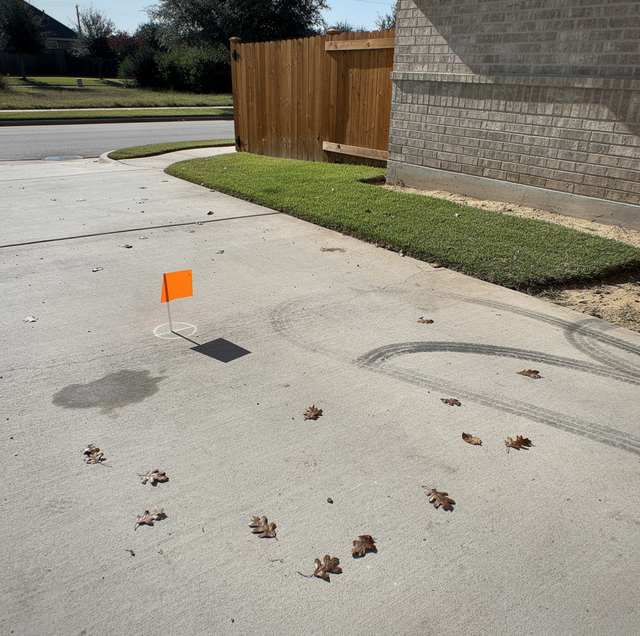
Small flags or a chalk mark at each item that must stay uncovered let the delivery team see at a glance where the container cannot land, even from the driver's seat.
Walking the Placement with the Delivery Team
Walking the spot with the delivery team when they arrive, rather than relying on directions given over the phone, settles exactly where the container will sit. Show them the exact spot, name anything nearby that shouldn't be covered or blocked, and confirm the approach you expect them to use. That same walk-through is worth repeating in your head before the day arrives: the spot that works for delivery, with a loaded vehicle pulling in, needs to still work for pickup, with a loaded container going back out the same way it came in.
A container being lowered or lifted can swing or drop suddenly, and a placed one can tip or crush a foot if pushed; only the delivery crew moves it, and everyone else stays well back while it is handled.
Frequently Asked Questions
A street or curb spot is a question for the city or the HOA, not something the delivery team can approve on the day.
Yes, when the garage is the loading door: a container parked in front of a garage door that opens outward or upward has to leave the door its full travel, plus room to carry furniture out.
No. Leaving open space along each side keeps loaders from clipping the siding or the container's corners as they carry furniture in and out.
On delivery day, if a car, trailer, or stacked materials are still sitting on the marked spot when the vehicle arrives, the crew has nowhere to set the container down.
The delivery team makes the final call on where the container sits, since ground conditions read differently up close than from the street; if the marked spot doesn't hold up, they'll walk the yard with you to find the next best option before setting anything down.
Once loading finishes, only the loading path and the approach the vehicle will use at pickup need to remain open; the rest of the yard can return to normal use.
Reserve a portable moving and storage container — delivered to your address and set down on protective materials at the spot confirmed with the delivery team. Timeless Moving LLC serves Katy, Cypress, Sugar Land. Call (346) 489-5383.